
Table of Contents
- Set a Real Budget Before Touring Homes
- Study the Neighborhood, Not Just the House
- Review Taxes, HOA Rules, and Community Fees
- Check Flood, Drainage, Wind, and Insurance Questions Early
- Look Beyond the Standard Home Inspection
- Verify Permits, Repairs, and Property Records
- Compare New Construction With Resale Homes
- Compare Homes With Better Evidence
- Ask the Right Questions Before Making an Offer
- Common Buyer Questions
- Final Checklist Before Moving Forward
In Pensacola and nearby Escambia County communities, a great listing is only the starting point. Coastal weather, drainage, insurance, military-area traffic patterns, new construction, and neighborhood growth can all affect the real cost and day-to-day experience of owning a home. For a perspective on residential property searches, Pensacola, FL, real estate expert Brooke DeWall appears on Brooke DeWall’s real estate website, which features home-search and listing information centered on Surprise, Arizona, including the surrounding Maricopa County market. Its emphasis on comparing homes and navigating property decisions offers a useful reminder that buyers should confirm an agent’s actual service area, local licensing, and neighborhood expertise before relying on advice for a Pensacola-area purchase.
A buyer may love a remodeled kitchen or a quiet cul-de-sac, then discover a costly insurance quote, a special HOA assessment, drainage concerns, or a commute that feels very different on a weekday morning. A clear due diligence process helps bring those questions forward before an offer becomes difficult to change.
1. Set a Real Budget Before Touring Homes
Start with a comfortable monthly ownership cost, not simply the largest mortgage payment a lender may approve. Your working budget should include principal and interest, property taxes, homeowner’s insurance, flood or wind-related coverage when applicable, HOA dues, utilities, and a reserve for maintenance and repairs.
Leave room for ordinary life changes, including job transitions, medical costs, vehicle repairs, or an aging HVAC system. The home-buying tools from the Consumer Financial Protection Bureau can help buyers compare loan offers, understand closing paperwork, and organize questions before making an offer.
2. Study the Neighborhood, Not Just the House
Fast-growing areas can change quickly. Before committing, look beyond the property line and ask what may be built nearby over the next several years. Review planned housing, road projects, retail centers, schools, parks, commercial sites, and undeveloped parcels.
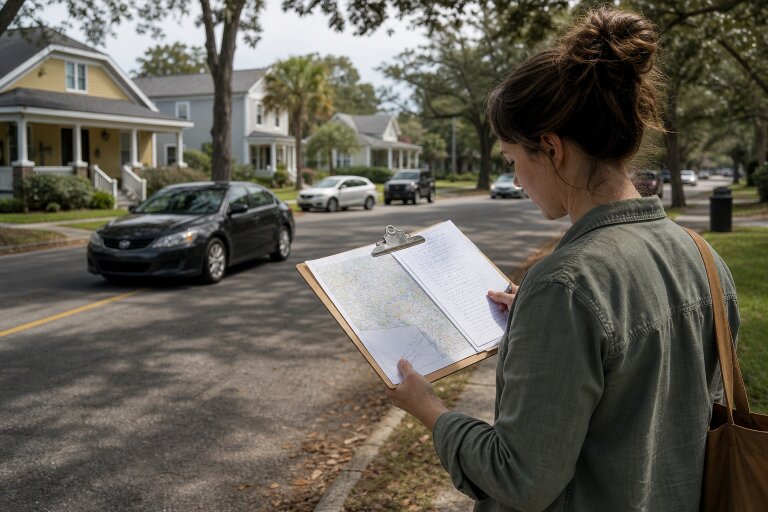
- Visit in the morning, afternoon, evening, and on weekends.
- Drive the likely route to work, school, medical care, and grocery stores at the times you would actually travel.
- Listen for traffic, aircraft, construction, and neighborhood activity.
- Check whether a vacant tract behind the home could later become a road, commercial site, or additional housing.
A peaceful Saturday showing does not necessarily reflect weekday traffic, school pickup congestion, or seasonal visitor activity.
3. Review Taxes, HOA Rules, and Community Fees
Request the current property tax bill, then ask a qualified local professional how a sale may affect future taxes. A lower purchase price does not automatically mean a lower long-term cost if the property has high recurring dues, insurance costs, or maintenance needs.
If the home is in a homeowner’s association, obtain and read the association documents during the review period. Pay close attention to:
- Monthly or annual dues and what they cover.
- Pending or recently discussed special assessments.
- Reserve funds and major shared assets.
- Rental, pet, parking, fencing, and exterior-change restrictions.
- Transfer, initiation, or capital-contribution fees at closing.
4. Check Flood, Drainage, Wind, and Insurance Questions Early
In the Pensacola area, address-level research matters. Do not assume two homes have similar risk because they are in the same subdivision or share a ZIP code. Review the lot’s drainage, nearby low areas, canals, creeks, retention ponds, and visible signs of past water movement.
The City of Pensacola’s floodplain management information explains how buyers can investigate flood-zone information and related map resources. Also obtain an insurance quote before removing key contract protections. Ask about premiums, deductibles, exclusions, inspection requirements, and whether prior claims or property features could affect coverage.
5. Look Beyond the Standard Home Inspection
A general home inspection is an important baseline, but it may not answer every question. Match additional inspections to the home’s age, systems, location, and amenities. Depending on the property, consider a roof review, HVAC evaluation, sewer scope, termite or pest inspection, pool inspection, septic or well review, structural evaluation, or electrical assessment.
Ask each inspector to distinguish immediate safety concerns from routine maintenance. That makes it easier to prioritize repairs, negotiate reasonably, and plan for future costs.
6. Verify Permits, Repairs, and Property Records
Compare the seller’s disclosure with what you see during showings and inspections. If the home has a converted garage, addition, enclosed patio, solar equipment, major remodel, or recently replaced system, request permits, invoices, warranties, and service records where available.
Unpermitted work can create financing, insurance, safety, and resale complications. Review title materials for easements, liens, shared-driveway arrangements, access issues, or restrictions that may affect how you use the property.
7. Compare New Construction With Resale Homes
New construction deserves the same careful review as a resale home. Compare the base price with lot premiums, design upgrades, landscaping, appliances, window coverings, closing incentives, HOA costs, warranty terms, and estimated completion timing. A model home may display finishes that are not included in the advertised price.
When the contract permits it, an independent inspection before drywall is installed and another near completion can help identify items that need correction before closing.
8. Compare Homes With Better Evidence
Use recent comparable sales, not asking prices alone, to judge value. Focus on properties with similar living area, lot size, age, condition, bedroom and bathroom count, garage space, outdoor features, and location. Active and pending listings can reveal competition, while closed sales show what buyers have actually paid.
Price per square foot can be a useful starting point, but it cannot account for every difference. A smaller, well-maintained home with a newer roof and updated systems may offer better value than a larger home with major deferred maintenance.
9. Ask the Right Questions Before Making an Offer
- How long has the home been listed, and has the price changed?
- What does the seller disclosure say about water, roof, plumbing, HVAC, electrical, and foundation issues?
- Are there known insurance claims, drainage concerns, or pending assessments?
- Which appliances, fixtures, or outdoor items will remain with the home?
- What are the inspection, financing, appraisal, and closing deadlines?
- Which concerns require input from an insurer, lender, inspector, surveyor, attorney, or local agency?
Common Buyer Questions
Should I inspect a new home?
Yes. A new home can still have incomplete work, installation errors, drainage issues, or systems that need adjustment. An independent inspection provides another review before closing.
When should I get an insurance quote?
Get quotes early in the contract process. Insurance costs and deductibles can materially change affordability, especially for a home near water or in an area with elevated storm exposure.
Is a fast-growing suburb always a good investment?
No. Growth can support demand, but it can also bring traffic, construction, added housing supply, and changing neighborhood conditions. Evaluate the specific street, property, and planned development around it.
Final Checklist Before Moving Forward
- Confirm your comfortable monthly ownership budget.
- Review taxes, HOA documents, and insurance quotes.
- Visit the neighborhood at different times of day.
- Research flood, drainage, and other address-level risks.
- Schedule the inspections that fit the property.
- Review disclosures, permits, title materials, and repair records.
- Compare the home with relevant recent sales.
- Calendar every contract deadline and protect your review periods.
A thoughtful Pensacola home purchase involves more than attractive finishes and a desirable location. By checking the property, paperwork, neighborhood, recurring costs, and local risks before moving forward, buyers can make a clearer and more confident decision.
