
Table of Contents
- Why Faith And Service Belong Together
- Start With The Needs Already Present
- Turn Mercy Into A Simple Weekly Practice
- Build A Service Team That Includes More People
- Use Civic Engagement Without Losing A Spirit Of Charity
- Partner With Local Groups Before Acting Alone
- Check Information Before Sharing It
- Keep Online Speech Honest And Helpful
- Measure Whether The Work Is Helping
- A 30-Day Plan For Faith-Based Community Service
- Common Questions
- Let Service Show What Conviction Means
Faith is most visible when it moves beyond private belief and becomes patient, useful care for another person. For Christians, service can begin with prayer and moral reflection, but it should also lead to practical choices: noticing hardship, offering time, sharing resources, and treating every neighbor with dignity.
Readers seeking a Catholic, values-centered perspective can find one at God and Country Now. Based in Westborough, Massachusetts, God And Country Now emphasizes prayer, good example, mercy, and action appropriate to the situation. Its message offers a relevant starting point for people who want to connect Christian moral responsibility with compassionate service in their local communities and throughout the United States.
Why Faith And Service Belong Together
Conviction matters, but conviction without compassion can become abstract. Service gives faith a daily expression. It asks, “Who is carrying a burden nearby, and what can I do responsibly to help?” That question is more productive than online anger, personal attacks, or arguments that do nothing to improve a neighbor’s circumstances.
Christian tradition offers a clear framework in the corporal works of mercy, which focus attention on practical needs such as hunger, illness, isolation, and shelter. Communities grow stronger when people pair deeply held beliefs with humble, consistent care.
Start With The Needs Already Present
Before creating a new ministry or service campaign, learn what is already needed. Speak with school staff, food pantry organizers, librarians, senior-service providers, shelter workers, and neighborhood leaders. A local group may need volunteers for deliveries more than donations, or tutors more than a one-day collection drive.
Listening first prevents duplicated work and helps volunteers avoid well-meaning efforts that miss the real need. Useful projects may include grocery delivery for homebound residents, rides to appointments, tutoring for students, yard help for older neighbors, or regular visits and phone calls to people who are isolated.
Turn Mercy Into A Simple Weekly Practice
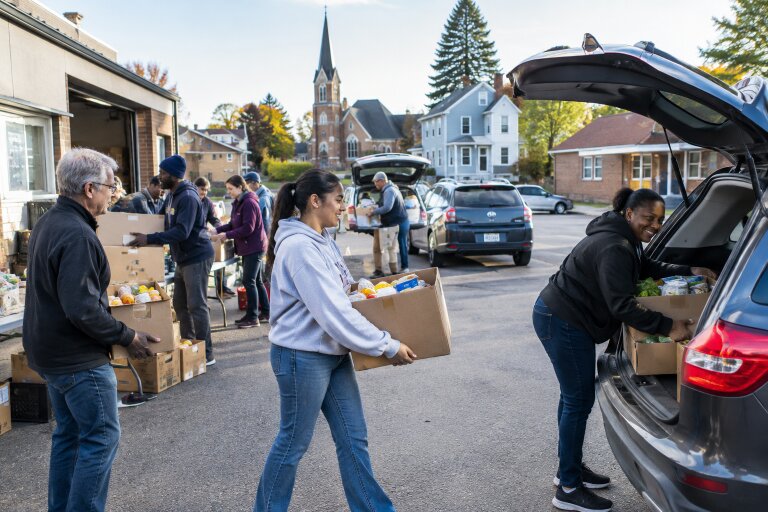
Large events can be meaningful, but steady service is often easier to sustain. A congregation, family, or small group can use a simple weekly rhythm:
- Choose one clear local need.
- Set aside a manageable amount of time or money.
- Invite one other person to participate.
- Complete one specific task.
- Review what helped, then adjust the next effort.
A reliable hour each week can be more valuable than an ambitious project that ends after a single weekend. Begin small enough to keep going.
Build A Service Team That Includes More People
Service should not be reserved for people with flexible schedules, physical strength, or long volunteer histories. Invite families, young adults, older residents, and people with disabilities to participate in ways that fit their abilities and availability. One person may pack supplies, another may make calls, and another may provide transportation or organize information.
Short-term roles help people who cannot commit every week. Clear instructions, accessible meeting spaces, and appreciation for different contributions make a service team more welcoming to neighbors from varied backgrounds.
Use Civic Engagement Without Losing A Spirit Of Charity
Civic engagement can include attending town meetings, contacting local officials, helping neighbors understand public information, volunteering, and voting according to conscience. It does not require treating political opponents as enemies. Faith communities can discuss public concerns honestly while protecting the dignity of people who disagree.
Service should never depend on a recipient’s political loyalty, religious affiliation, or ability to repay the help. A meal, ride, or tutoring session is not a reward for agreement. It is an act of neighborly care.
Partner With Local Groups Before Acting Alone
Partnerships often make service safer and more effective. Food banks, schools, shelters, veterans’ organizations, libraries, and neighborhood associations may already have training, procedures, and relationships with the people they serve. Supporting an established program can be wiser than launching a competing effort.
Keep a short list of trusted contacts, including a name, phone number, service area, and the type of help needed. Review the list regularly so volunteers know where to direct families facing urgent concerns.
Check Information Before Sharing It
Crises and emotionally charged issues can produce misleading claims, altered images, and urgent requests for money or personal information. Before sharing a post, check its date, author, original source, and whether reliable local organizations confirm it. If an unexpected message urges immediate action, the signs of a phishing scam can help people recognize suspicious links, attachments, and requests for sensitive information.
When facts cannot be verified, do not forward the claim. Pausing before sharing is a practical form of honesty and care.
Keep Online Speech Honest And Helpful
Before posting, ask three questions: Is it true? Is it necessary? Is it charitable? Strong moral views can be expressed without insults or mockery. When correcting a false claim, address the information rather than attacking the person who shared it.
Online discussion is most useful when it leads to constructive action, such as volunteering, donating through a verified organization, checking on a neighbor, or attending a local public meeting.
Measure Whether The Work Is Helping
Good intentions deserve honest evaluation. Track simple results, such as meals delivered, rides completed, students tutored, or households connected with services. Ask recipients and volunteers what was useful, unclear, or missing. If a project creates waste, confusion, or strain, change the plan.
A 30-Day Plan For Faith-Based Community Service
- Week One: Listen to residents and identify one specific need.
- Week Two: Contact an established local group and learn its procedures.
- Week Three: Recruit a small team and complete one practical task.
- Week Four: Review the results, thank participants, and schedule the next step.
Common Questions
Can A Small Congregation Make A Difference?
Yes. A small group can focus on one repeatable need and become dependable over time.
What If Volunteers Have Limited Time?
Use short, clearly defined roles. A phone call, grocery pickup, or hour of tutoring can still matter.
Should Faith Communities Work With Other Groups?
Often, yes. Shared service can build trust while allowing each group to retain its own beliefs and identity.
Let Service Show What Conviction Means
Faith becomes more credible when it produces patience, honesty, mercy, and useful service. In 2026, begin with one neighbor, one need, and one repeatable action. Listen well, serve humbly, speak truthfully, and keep showing up.
