
Key Takeaways
- Small gardens can support pollinators by offering flowers, water, shelter, and pesticide-conscious care.
- Native and climate-appropriate plants are often reliable choices for local gardens.
- Planting several flower types with different shapes and bloom times attracts a wider range of visitors.
- Sun exposure, drainage, mature plant size, and watering needs should guide every purchase.
- Containers, window boxes, patios, and raised beds can all become productive pollinator spaces.
A small garden can do meaningful work for bees, butterflies, hummingbirds, and other helpful visitors. Whether you have a narrow border beside the driveway, a sunny apartment balcony, or a few containers on a patio, thoughtful flower choices can create a colorful space that provides nectar, pollen, water, and cover. Even homeowners planning holiday flower decor Boston MA can use the same principles of color, seasonality, and plant placement to make outdoor spaces feel more inviting.
The best pollinator garden is not necessarily the biggest or the most complicated. It suits the available light, soil, climate, and amount of care you can provide. Start small, select plants that thrive in your conditions, and aim for flowers that bloom across more than one part of the growing season.
Why Small Gardens Matter
Pollinators do not require a sprawling meadow to benefit from a garden. A cluster of flowering plants can provide a valuable stop for insects moving through urban and suburban neighborhoods. The U.S. Forest Service explains that pollinators play an important role in the reproduction of flowering plants, which is one reason even modest home landscapes can matter. Learn more about pollinators and their role in healthy landscapes.
A small garden can still look orderly and intentional. Place plants in repeating groups, edge beds with lower-growing flowers, and reserve taller plants for the back of a border or the center of a large container. For example, a balcony planter with one upright flowering plant, one mounded bloomer, and one trailing plant can offer color without appearing crowded.
Check Your Space Before Choosing Plants
Before bringing any flowers home, take a quick inventory of the growing area. This simple step prevents disappointment and helps you buy plants that have a realistic chance of thriving.
- Count direct sunlight: Full sun generally means six or more hours of direct light daily. Morning-only sun and filtered light often qualify as partial shade.
- Measure the space: Check the available width, depth, and height, then compare them with each plant’s mature size.
- Watch drainage: After rain or watering, note whether the soil stays soggy or dries unusually fast.
- Notice heat and wind: Brick walls, reflective pavement, rooftops, and exposed balconies can create hotter, drier conditions.
- Be honest about maintenance: If daily watering is unrealistic, choose drought-tolerant plants or larger containers that hold moisture longer.
Choose Flowers With Pollinators in Mind
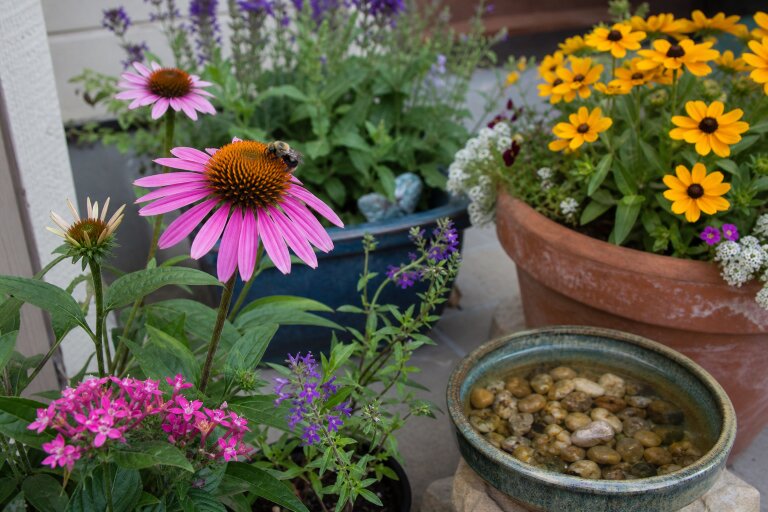
Different pollinators use flowers in different ways. Open, daisy-like blooms often make pollen and nectar easy for small bees, beetles, and hoverflies to reach. Tubular flowers can be especially useful for hummingbirds and long-tongued insects. A mix of forms is more valuable than a garden filled with one flower type alone.
Flower Features Worth Looking For
- Long bloom periods or repeat flowering habits.
- Visible centers with accessible pollen and nectar.
- A range of flower colors, sizes, and shapes.
- Plants suited to your region’s temperature and rainfall patterns.
- Strong disease resistance and limited need for chemical treatments.
- Noninvasive varieties that will not overwhelm nearby plants or natural areas.
Native flowers are often an excellent starting point because they are adapted to local conditions and may support local wildlife relationships. Still, a well-behaved, noninvasive plant that thrives in your garden can also be useful. Focus on plant performance, diversity, and responsible care rather than treating a single label as the sole measure of value.
Plan for Flowers Across the Season
A garden full of blooms in one month is lovely, but pollinators benefit more when food is available from early spring into fall. Build a simple bloom calendar by noting when each plant begins and ends flowering. Then add one or two plants to cover the gaps.
- Early season: Include cool-weather bloomers that offer food when fewer flowers are open.
- Midseason: Use long-blooming plants as the main source of color and activity.
- Late season: Choose sturdy late flowers and consider leaving some seed heads in place after blooming ends.
When possible, plant three or more of the same variety together. Clusters are easier for pollinators to notice than isolated single plants, and they create a fuller, more polished design for people to enjoy as well.
Use Containers, Window Boxes, and Patios
Renters and gardeners without a yard can still create a useful planting area. Choose containers with drainage holes, use a quality potting mix, and group pots together so they make a larger visual target. Position tall plants toward the back of a wall-side display, or in the middle of a container viewed from all sides.
Use pots that provide enough root room for the mature plant, not just the small nursery plant you bring home. Larger containers dry out more slowly and are less likely to tip in windy areas. Avoid packing too wide a variety into one pot, since overcrowding leads to weak growth, uneven watering, and fewer flowers.
Get Water and Soil Basics Right
Healthy plants produce more flowers, and more flowers usually mean more opportunities for pollinators. Use loose, well-draining soil, water deeply enough to moisten the root zone, and let the soil surface begin to dry before watering again. A thin layer of mulch can reduce evaporation in in-ground beds.
Use pesticides only after identifying the problem and considering nonchemical options first. Hand-picking pests, improving airflow, removing damaged leaves, and encouraging beneficial insects can often solve minor issues. The Environmental Protection Agency offers additional information on protecting bees and other pollinators from pesticides.
Avoid Common Garden Mistakes
- Choosing flowers only for color instead of matching them to the light and soil.
- Planting one of every variety instead of forming useful clusters.
- Ignoring mature size and allowing plants to crowd each other.
- Using heavy soil that stays wet around roots.
- Removing every leaf, stem, and seed head in the fall.
- Spraying broadly before determining whether an insect is actually harmful.
- Forgetting a shallow water source with stones or pebbles for safe landing spots.
A Simple Small-Garden Plan
For a compact bed or a group of containers, use a simple layered design: one tall flowering plant for height, two medium flowering plants for the main display, two low plants to soften the edges, and one fragrant herb or flowering herb for added interest. Add a shallow-water dish with a few stones and place it where it can be easily refreshed.
Repeat this combination in several containers or sections of a small bed, rather than mixing all available plants into one space. Repetition creates a cohesive look, makes plant care easier, and gives pollinators clearer patches of flowers to visit.
Common Questions
Do small gardens really help pollinators?
Yes. Small spaces offer food and resting places, especially when several gardens in a neighborhood provide different flowers throughout the season.
Are native flowers always the best choice?
They are often highly beneficial, but the best garden includes plants suited to the site, noninvasive, and capable of remaining healthy with reasonable care.
Can flowers grow well in containers?
Absolutely. Give them adequate light, drainage, soil volume, and consistent moisture. Compact varieties are usually easiest to manage.
What should be left in the garden during winter?
When practical, leave some healthy stems, seed heads, and leaf litter in place until spring. They can provide food, structure, and shelter for wildlife.
Conclusion
A pollinator-friendly garden does not require a large yard, a large budget, or expert-level gardening skills. Begin with your available space, choose flowers that fit the conditions, and plan for blooms over a longer season. A few well-chosen plants can turn a balcony, patio, window box, or compact garden bed into a brighter and more supportive part of the neighborhood.
